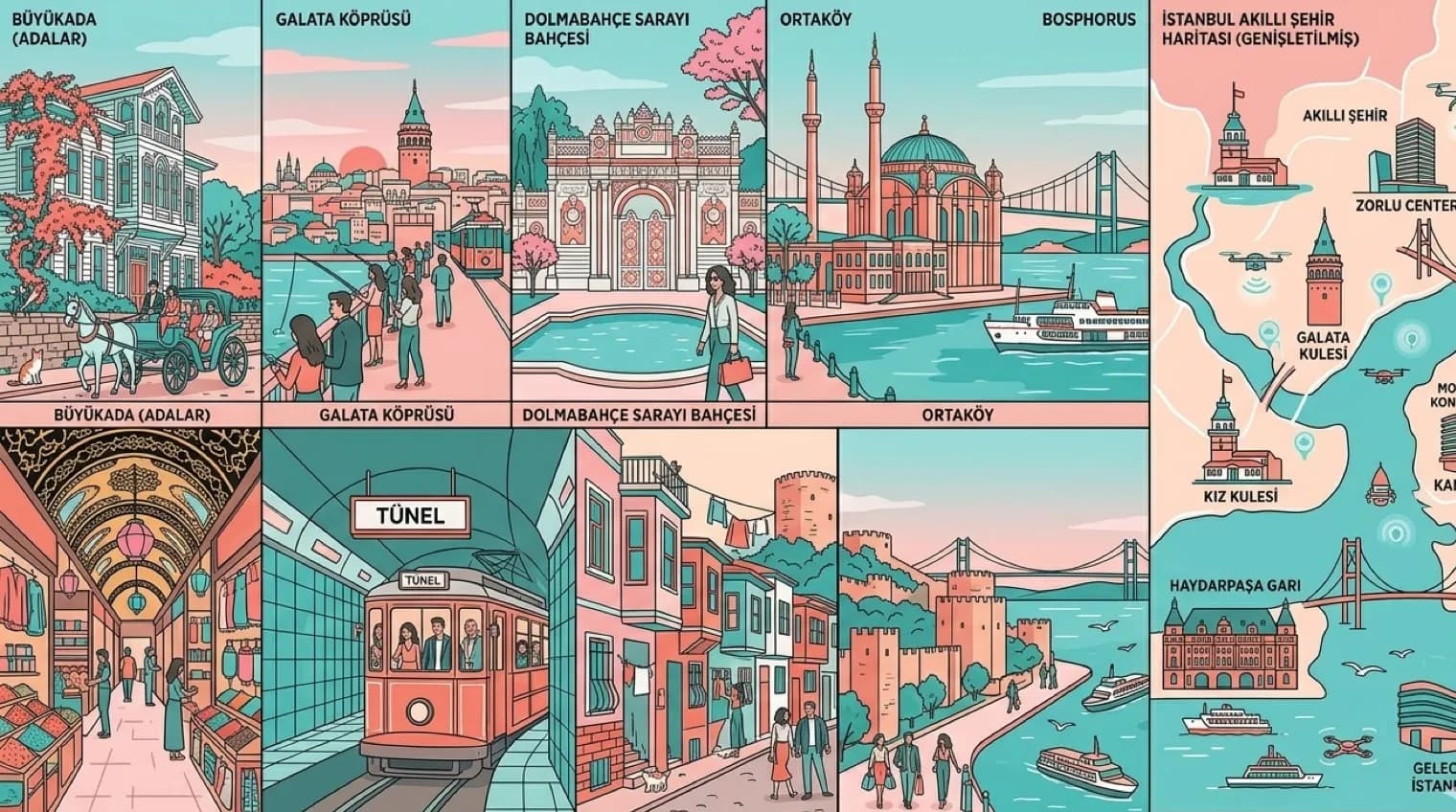
So you are moving to Istanbul. Maybe you already have one foot on the plane. Maybe you are still deciding. Either way, this guide is for you. I was born and raised in Istanbul 35 years ago, and I have watched this city transform, absorb, and change thousands of expats along the way. This is the honest, up-to-date 2026 guide I wish someone had given me when helping friends move here. No marketing fluff. Real numbers, real rules, real pitfalls.
The Big Picture First
Istanbul is not for everyone, and that is a feature, not a bug. It is loud, crowded, bureaucratic, and chaotic. It is also intoxicating, affordable, deeply hospitable, and unlike any other city on Earth. Before you move, ask yourself: do I thrive in complexity or do I crave order? Istanbul rewards the first type and crushes the second. If you are flexible, curious, and willing to laugh at yourself, you will love it here.
Can you build a life here in 2026? Yes. Is it harder than it was five years ago? Also yes. Turkey has tightened residence permit rules significantly and stopped approving most tourism-based renewals; the 2022-25 neighborhood closures were reportedly lifted in June 2026, but the address rules have changed twice in a year and still need checking. This guide walks you through each of these changes and how to navigate them.
Doing the whole move? Track it step by step hereStep 1 Visa And Entry
For most Western passports, entering Turkey is now easier than it was a few years ago. US citizens with ordinary passports can enter Turkey visa-free for up to 90 days within any 180-day period — this rule changed in December 2023. UK citizens have the same 90-day visa-free allowance. EU citizens also get 90 days without a visa.
If you are from a country that still requires an e-visa, the process takes about 3 minutes online at evisa.gov.tr. Fees range from $30 to $60 depending on nationality. Most e-visas are issued instantly.
Your passport must be valid for at least 60 days beyond your planned stay — but for residence permit applications you need 60 days beyond the end of your requested permit, so if you plan to apply for a one-year permit, your passport needs at least 14 months of validity.
Important rule most people miss: the 90-day visa-free period is per 180-day window, not per entry. Leaving Türkiye does not reset your 90 days — the window slides, so a weekend out and back changes nothing about the total. You cannot simply leave Turkey for a weekend and come back to reset the clock. If you overstay, you will face fines and possibly a re-entry ban.
Step 2 Residence Permit The 2026 Reality
If you plan to stay longer than 90 days, you need a residence permit, called ikamet izni in Turkish. The application process went fully digital — everything now starts at e-ikamet.goc.gov.tr.
Here is what changed in 2026 that matters:
Tourism-based permit renewals are rarely approved anymore. If your first permit was issued based on tourism, do not assume you can simply renew. The government is pushing applicants to switch to a legitimate long-term reason — property ownership, family ties, employment, or student status.
Income documentation is now stricter. Most applicants must demonstrate a stable monthly income of approximately 1.5 times the Turkish minimum wage. Nationality does not exempt anyone from that. The published short-term document list keys only FEES to nationality — the permit harç, and the single-entry visa harç for certain country groups. Every applicant declares sufficient and regular means, whatever passport they hold.
Property investment threshold is USD 200,000 minimum for a residence permit based on real estate. This went up significantly from previous years.
Processing times in Istanbul are now 6 to 8 weeks due to high application volume. Start early.
The full residence permit process is covered in our detailed 2026 residence permit guide. Read it before you do anything else.
Step 3 Neighborhood Registration Rules Still Verify Before You Sign
This used to be the silent deal-breaker of this guide, and the story changed again in June 2026. Between 2022 and 2025, over 1,169 neighborhoods across Turkey were closed to new foreign residence registrations — in Istanbul, ten entire districts were affected: Kucukcekmece, Basaksehir, Bagcilar, Avcilar, Bahcelievler, Sultangazi, Esenler, Esenyurt, Fatih, and Zeytinburnu.
In early June 2026 that practice was reportedly lifted across most of the country: e-ikamet stopped blocking applications from previously closed areas. Reports conflict on whether Fatih and Esenyurt remain closed, and there has been no official announcement either way.
Why this still matters: the rule has now flipped twice in about a year, and an address's status is checked when you apply, not when you sign. Before signing any lease, check the exact address on e-ikamet or call the 157 foreigners' line, and confirm that specific address accepts new foreign registrations. Five minutes that can still save you months of pain.
Step 4 Choosing A Neighborhood
Where you live in Istanbul determines 80% of your daily experience. With 39 districts and thousands of neighborhoods, the choice can be overwhelming. Here are the areas that still work for expats in 2026.
European Side favorites: Cihangir (the classic expat hub, hilltop apartments, cafes, walkable), Galata (trendy, tourist-adjacent, rooftop bars), Besiktas (central, waterfront, good value), Ortakoy (Bosphorus views, weekends get crowded), Bebek (upscale, expensive, beautiful), Nisantasi (luxury shopping, old-money European feel).
Asian Side favorites: Moda (waterfront Kadikoy, cafes, bookstores, calmer), Caddebostan (coastal, upscale, family-friendly), Uskudar (authentic Turkish culture, affordable), Atasehir (modern high-rises, amenities, less character).
For detailed analysis of each neighborhood with current rent prices, see our complete neighborhoods guide.
Step 5 Cost Of Living Real Numbers
Here are 2026 Istanbul cost-of-living numbers in USD. These are verified from multiple sources and match what expats actually report paying.
Monthly total for a single person: $977 to $1,821 depending on lifestyle. For a family of four: $1,980 to $2,304 per month.
Rent is your biggest variable. A 1+1 apartment (one bedroom plus living room) in popular central neighborhoods like Sisli, Besiktas, or Kadikoy now runs between $750 and $1,350 per month. To see what your full monthly budget would look like in a specific area, run the numbers through our free Istanbul cost of living calculator. Premium areas like Caddebostan or Suadiye average $1,830 per month. Sariyer neighborhoods like Emirgan or Istinye run around $1,715 per month. Besiktas premium zones like Etiler and Bebek average $1,460 per month. Budget-friendly peripheral neighborhoods start around $450 per month for older, smaller apartments.
Other monthly costs for a single person: groceries $200 to $350, transport card $25 to $40, mobile phone plan $10 to $20, gym membership $30 to $60, utilities (electric, gas, water, internet) $80 to $150.
Eating out is one of Istanbul's great pleasures and remains affordable by international standards. A meal at a local lokanta costs $3 to $6. A mid-range restaurant dinner for two runs $25 to $50. A craft cocktail at a trendy bar is $8 to $15.
The dual economy reality: if you earn in USD, EUR, or GBP, Istanbul offers enormous purchasing power. If you earn in Turkish lira, inflation makes daily expenses a permanent challenge. Most expats benefit from the first scenario.
For a detailed breakdown of every category, see our Istanbul cost of living guide.
Step 6 Health Insurance And Healthcare
Turkish health insurance is required for your residence permit application unless you are under 18 or over 65 on a short-term permit. If you apply from inside Türkiye, the policy must be one made in Türkiye, so foreign travel insurance or an international plan bought abroad will not do; cover under a social-security agreement (SGK) also counts.
Turkish health insurance for residence permit purposes is priced mostly by age and coverage level. Popular providers include Allianz Sigorta, Mapfre Sigorta, Axa Sigorta, and Anadolu Sigorta.
International plans (the kind that cover you worldwide) cost far more than a local permit policy and are priced by age and cover, so get a quote rather than trusting a published range. Bought abroad, they also don't satisfy a permit application made inside Türkiye.
After living in Turkey for one year, you become eligible to join the public SGK system voluntarily, which costs 7,927.20 TL a month in 2026 (24% of the gross minimum wage). This covers the public healthcare network.
Istanbul's private hospitals are excellent and many doctors trained abroad. The top English-friendly options include Amerikan Hastanesi (Nisantasi), Acibadem (multiple locations), Memorial (multiple locations), and Liv Hospital (Ulus). For complete details on insurance, hospitals, and navigating the healthcare system, see our Turkey healthcare guide.
Step 7 Opening A Bank Account
You will need a Turkish bank account for rent, utilities, salary, and daily life. The process requires your residence permit (or, in some banks, just a tax number and passport) and takes 30 to 60 minutes at a branch.
Most foreigner-friendly banks in 2026 are Garanti BBVA, Denizbank, QNB Finansbank, and Akbank. Bring your passport, tax number, proof of address (rental contract), and patience. For a step-by-step guide on which bank to pick and what to expect, see our opening a bank account guide.
Step 8 Getting A Phone And Internet
The first thing you need to know: if you bring a foreign phone to Turkey, you have 120 days to register it with the government before it gets blocked on Turkish networks. This applies to every foreign phone entering the country. Registration now costs a serious fee — 54,258 TL for 2026, roughly $1,150 — set annually in the Resmi Gazete, and since July 2026 the application runs only through e-Devlet. For most people, buying a phone locally is cheaper than registering an imported one.
The workaround many expats use is buying a Turkish phone locally once they arrive. Phones purchased in Turkey do not need IMEI registration. For the complete process, including what happens if you miss the 120-day window, see our IMEI registration guide.
For mobile plans, Turkcell, Vodafone, and Turk Telekom are the three main carriers. Unlimited data plans run $10 to $25 per month. Home internet through the same providers costs $20 to $40 per month for reasonable speeds.
Step 9 Language And Communication
Here is the honest truth: you can live in Istanbul without speaking Turkish, but your quality of life will be much better if you learn the basics. In central expat neighborhoods (Cihangir, Moda, Nisantasi) English is common. Outside of these areas, Turkish is essential for daily life.
Learn these 15 phrases before you arrive: Merhaba (hello), Tesekkurler (thank you), Lutfen (please), Evet (yes), Hayir (no), Ne kadar (how much), Anlamadim (I did not understand), Turkce bilmiyorum (I do not speak Turkish), Yardim edebilir misiniz (can you help), Hesap lutfen (check please), Su lutfen (water please), Iyi gunler (good day), Gorusuruz (see you), Afiyet olsun (enjoy your meal), Kolay gelsin (may it come easy — said to anyone working).
Consider enrolling in a Turkish course at Tomer, Dilmer, or one of Istanbul's many private language schools. Three months of evening classes will transform your daily experience.
Step 10 Practical First-week Tasks
Here is your realistic week-one checklist after arriving in Istanbul:
Day 1: Arrive, check into temporary accommodation (Airbnb or hotel for 2-4 weeks while you search for a permanent place). Get a local SIM card.
Day 2-3: Get your tax number (vergi numarasi) at any Vergi Dairesi. This is free, takes 15 minutes, and you need it for everything.
Day 4-5: Open a Turkish bank account. Bring passport and tax number.
Day 6-7: Start apartment hunting. Visit neighborhoods in person. Check the address on e-ikamet or with the 157 line before signing anything.
Week 2-3: Purchase health insurance. Sign lease. Notarize lease at noter. Register phone (IMEI) if you brought one from abroad.
Week 3-4: Submit residence permit application online at e-ikamet.goc.gov.tr. Attend appointment. Wait for permit card delivery.
Budgeting For Your Move
Here is a realistic one-time cost estimate for your first month in Istanbul:
Temporary accommodation (2-3 weeks Airbnb while searching): $800 to $1,500
Apartment rental deposit (typically 1 to 2 months rent): $750 to $2,700
Real estate agent commission (1 month rent, standard in Turkey): $750 to $1,350
Health insurance (1 year prepaid): priced by age, so compare two or three quotes
Residence permit fees: $100 to $200
Phone registration (IMEI): ~$1,150 (54,258 TL, 2026) — or skip it and buy a phone locally
First month furniture and essentials (if unfurnished): $500 to $2,000
Legal translation and notary services: $50 to $150
Total first-month costs (excluding regular monthly expenses): $3,340 to $8,900
Realistic total to have saved before moving: $6,000 to $12,000 depending on your lifestyle.
Mistakes To Avoid
Signing a lease without verifying the address registers cleanly. Even after the June 2026 reopening, this is the number one mistake — check every address on e-ikamet or with the 157 line before signing, because the rules have changed twice in a year.
Assuming your international driving license works long-term. Foreigners can drive on a foreign license for 6 months maximum. After that, you need a Turkish license. See our Turkish driving license guide.
Using unlicensed currency exchanges or informal money transfer services. Always use registered banks or licensed exchange offices (doviz burolari).
Trusting verbal agreements. Get everything in writing, even with landlords and service providers.
Falling for common scams. Tourist scams in Istanbul include restaurant check padding, taxi meter manipulation, and fake real estate listings. Read our common Turkey scams guide.
Bringing your pet without researching first. Turkey has specific pet import rules including microchip, vaccinations, and health certificates. See our pet relocation guide.
What It Feels Like To Live Here
Numbers and procedures aside, what is it actually like to live in Istanbul in 2026? It is a city of contradictions. Ancient and ultra-modern. Conservative and progressive. Frustrating and exhilarating, sometimes in the same afternoon.
You will find yourself in a 500-year-old mosque one hour and a cutting-edge coworking space the next. You will eat the best food of your life for $4 and be frustrated that getting a new utility connection takes three visits and four forms. You will make friends with neighbors who bring you homemade borek on your first day and lose your patience with bureaucracy that has not updated its forms since 1994.
You will miss your life in Istanbul the moment you leave, even if you swore it was too much. That is the thing about this city. It gets into your bones. After 35 years here, I can tell you — nothing else quite compares.
Resources We Built For You
We built this entire site to make your move easier. Here is what is available right now:
[AI Expat Assistant](/) — Ask any question about living in Istanbul and get instant answers in English. Trained on real expat experiences and Turkish bureaucracy knowledge.
Document Scanner — Scan any Turkish document (lease, bill, official letter) and get a full translation plus plain-English explanation.
Neighborhoods Explorer — Compare 20 neighborhoods across Istanbul and the coast side by side with safety, rent, lifestyle, and expat-friendliness scores.
Events Feed — Live events in Istanbul (concerts, theater, exhibitions, nightlife, community meetups) updated daily.
Community — Connect with other expats already living here.
Moving to Istanbul in 2026 is harder than it was ten years ago. But it is also more rewarding. The city has more infrastructure, better international hospitals, more coworking spaces, and a larger expat community than ever. If you come prepared, do your research, and respect the complexity, Istanbul will give you one of the greatest adventures of your life.
Good luck. Welcome home.
One email when something actually changes.
No weekly send and no filler — a short welcome note now, then an email only when a fee moves, a rule changes, or a new guide lands. I write them myself. Unsubscribe in one tap.
Have more questions?
Ask our AI assistant — built from 35 years of Istanbul experience.
Ask SettleIn AI →